Corporate Jet Dallas to Las Vegas
Corporate jet Dallas to Las Vegas covers 925 nautical miles from Love Field or Addison to Harry Reid or Henderson. A light jet flies the leg in 2 hours 34 minutes, with estimates from $9,500 to $15,000. This guide covers classes, airports, and how companies plan the return.
- 925 nm1,064 sm
- 2h 34mlight jet duration
- $9,500–$15,000one-way quote
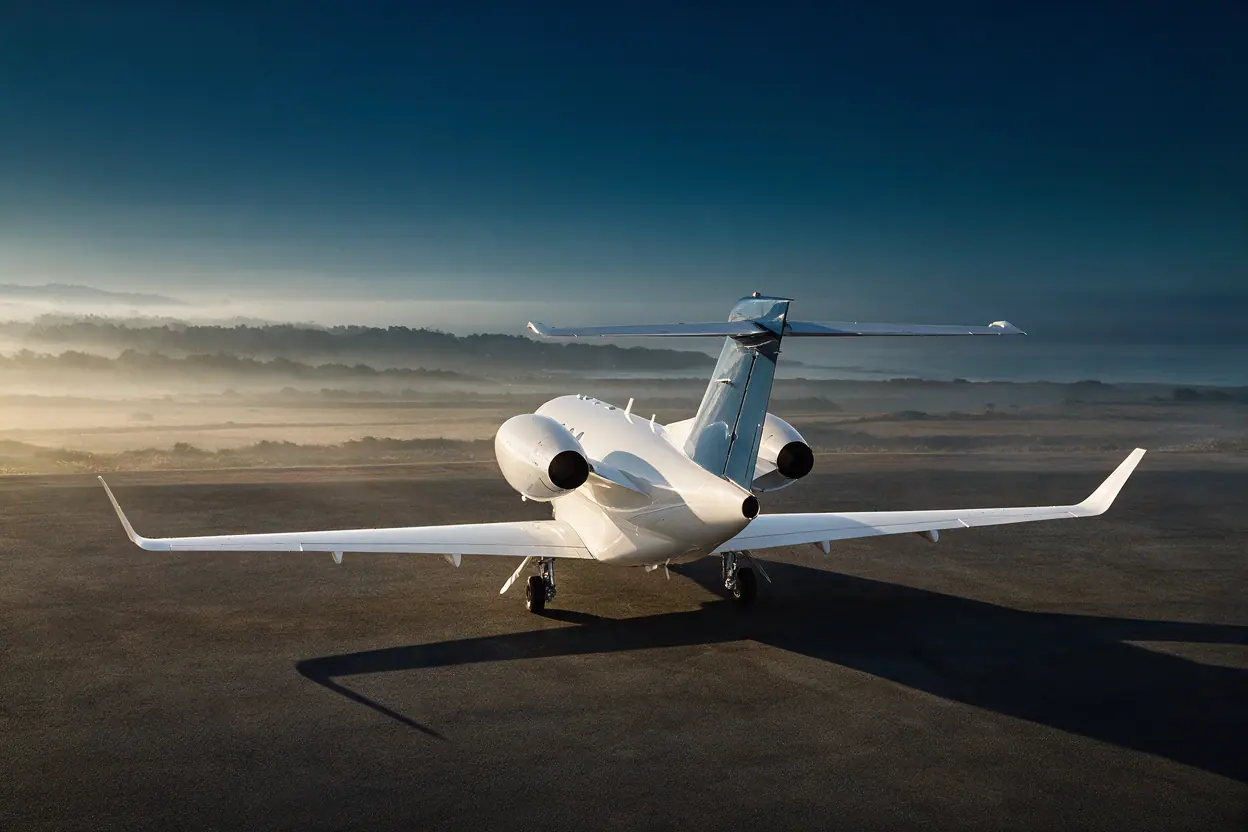
Aircraft pricing for Dallas to Las Vegas private jet
A private jet from Dallas to Las Vegas flies 925 nautical miles in 2h 34m on a light jet, quoted at $9,500–$15,000 one way.The table below sets each class against this leg, listing block time and estimated one-way price. The trip is 925 nautical miles, which puts every jet class here in nonstop range. Figures are estimates for budgeting, not quotes. A firm number depends on your aircraft, tail availability and the day you fly, so treat the spread as the range you are working inside.
| Jet category | En route time | Single-leg est. | Detail |
|---|---|---|---|
| Turboprop | 3h 32m | $8,000–$12,500 | Nonstop |
| Light jet | 2h 34m | $9,500–$15,000 | Preferred match |
| Midsize jet | 2h 30m | $13,000–$19,500 | Nonstop |
| Super-midsize jet | 2h 22m | $17,000–$23,500 | Nonstop |
| Heavy jet | 2h 22m | $22,500–$34,500 | Nonstop |
Priced per aircraft, not per passenger, excluding federal excise tax and segment fees. Block time covers taxi, climb, and descent.
Airline ticket costs vs charter, Dallas–Las Vegas
Airline prices are the lowest fares Google Flights displayed for one passenger on Dec 9, 2026 (checked Nov 15, 2026); the charter row is our estimate for the entire aircraft. For 7 passengers, first class airline seat tickets total about $6,230, compared with $9,500–$15,000 for the whole light jet.
| Way to fly | Operator | Dur. | Single-leg est. | Per seat |
|---|---|---|---|---|
| Coach on the airlines | Frontier · nonstop | 2h 59m | $61 | $61 |
| First class airline seat | American · nonstop | 2h 55m | $890 | $890 |
| Light jet | Full plane, seating as many as 7 | 2h 34m | $9,500–$15,000 | $1,360–$2,140 |
Airline ticket prices shift daily and cover no bags past the fare allowance; the per-seat charter number assumes every seat is occupied.
How a light jet suits this mission
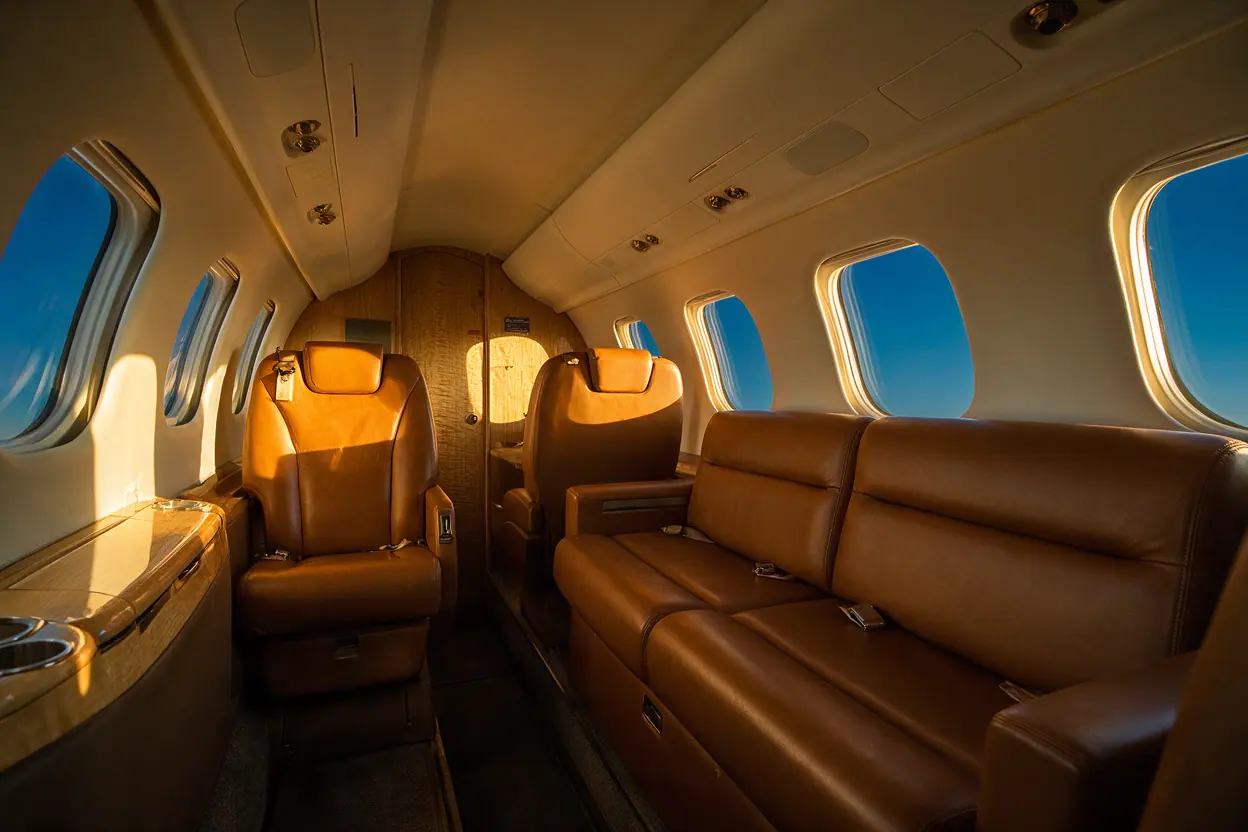
A light jet fits this distance better than any other class. The leg runs 925 nautical miles, and the Citation CJ4 Gen2 and Phenom 300E both carry seven passengers well beyond that, so you are not trading range for economy. Light jets like the Citation CJ4 Gen2 and Phenom 300E cover 925 nautical miles nonstop with seven passengers and full baggage, which keeps this half-continent leg efficient. A light jet is also the lowest-cost option that skips turboprop speeds, with light estimates from $9,500 to $15,000 each way.
The midsize class adds cabin room and typically a bit of luggage space for a modest step up, running roughly $13,000 to $19,500. Super-midsize and heavy jets clear the same route faster but cost materially more, and the time saved over 2 hours 30 minutes is small. Turboprops work, though few companies pick one for this Las Vegas leg because the 3h 32m block time eats into a meeting day. For most Dallas teams, the light jet is the sweet spot: enough range, enough seats, and the lowest acceptable cost per passenger.
Cessna Citation CJ4 Gen2
- 7 pax
- 451 kt speed
- 2,165 nm legs
Cabin size 4 ft 9 in tall, 17 ft 4 in long. Bags 71 cu ft.
Embraer Phenom 300E
- 7 pax
- 464 kt speed
- 2,010 nm legs
Cabin size 4 ft 11 in tall, 17 ft 2 in long. Bags 84 cu ft.
When to fly corporate jet Dallas
Demand peaks around large conventions, major fight cards and holiday weekends, and light jet availability tightens first on those dates. If your trip lands on a convention week, then locking an aircraft several weeks out protects both the rate and the departure time you want. Return legs are where Dallas travelers get squeezed. Sunday afternoons and the Monday morning rush out of Las Vegas fill quickly, so confirm your return slot when you book the outbound. A same-day turnaround is workable at this distance: the outbound runs 2 hours 30 minutes, leaving several usable hours before an evening return.
Morning departures from Dallas usually meet cooler air, and summer afternoons in Las Vegas push ground temperatures high, which can affect performance on smaller aircraft. If your schedule allows, then earlier wheels-down in Las Vegas makes the day easier for everyone aboard. For corporate jet Dallas to Las Vegas trips, booking the return leg at the same time as the outbound is the single most effective way to avoid getting stuck on a peak Sunday.

Leaving Dallas
Most Dallas departures use Love Field or Addison Airport, and the choice depends on where your aircraft is based and where your team starts the day. Love Field's 8,800-foot runway and Addison's 7,203-foot runway both handle light and midsize jets without payload limits on a leg to Las Vegas. If your team is coming from the north Dallas corridor, then Addison usually saves a drive, while downtown departures often favor Love Field. Plan to arrive before your scheduled time so bags and passengers are aboard when the crew is ready.
Arriving in Las Vegas
Your jet can land at Harry Reid International, the strip-side field with a 14,835-foot runway, or at Henderson Executive southeast of the valley. Harry Reid puts you closest to the Strip and convention campus, while Henderson often shortens apron time and the drive to suburban meetings. When your schedule centers on the Las Vegas Convention Center or a resort block, then Harry Reid usually wins on drive time. If two properties sit on either side of the valley, splitting arrival and departure airports can cut ground time.
| Field | ID | Rwy |
|---|---|---|
| Harry Reid International Airport | KLAS / LAS | 14,835 ft |
| Henderson Executive Airport | KHND / HSH | 6,501 ft |
| Dallas Love Field | KDAL / DAL | 8,800 ft |
| Addison Airport | KADS / ADS | 7,203 ft |
Comparable private jet routes for Dallas – Las Vegas
These 6 private jet routes cover 808 to 1,042 nautical miles, with one-way light jet estimates ranging $8,500 to $16,500.
This route’s FAQs
How long is a corporate jet Dallas to Las Vegas flight?
A light or midsize jet flies the 925-nautical-mile leg in about 2 hours 30 minutes nonstop. Super-midsize and heavy jets trim that to roughly 2 hours 22 minutes, and turboprops take about 3 hours 32 minutes. Add taxi and boarding time on each end when you build a door-to-door schedule for your team.
What does a corporate jet Dallas to Las Vegas cost?
Light jet estimates run from $9,500 to $15,000 one way, and midsize jets from $13,000 to $19,500. Super-midsize figures sit near $17,000 to $23,500, heavy jets near $22,500 to $34,500, and turboprops around $8,000 to $12,500. These are estimates, so request a quote for your dates.
Which aircraft class works best for this route?
A light jet, such as the Citation CJ4 Gen2 or Phenom 300E, fits the 925-nautical-mile leg with room to spare and carries up to seven passengers. Both cruise above 450 knots and carry more than 70 cubic feet of baggage, which suits a small team with normal luggage on a two-and-a-half-hour flight.
Which Las Vegas airport should we use?
Harry Reid International sits closest to the Strip and the convention center and has a 14,835-foot runway. Henderson Executive is southeast of the valley and often faster for suburban meetings or a quieter departure. If your meetings split across the valley, then using one airport inbound and the other outbound can trim ground time.
Can we fly Dallas to Las Vegas and return the same day?
Yes. With roughly 2 hours 30 minutes each way in a light or midsize jet, a morning departure, a full afternoon of meetings and an evening return all fit in one day. Confirm the return aircraft and crew when you book, because Las Vegas weekend and convention demand can limit same-day return availability.
When should we book a corporate jet Dallas to Las Vegas?
For convention weeks, major events and holiday weekends, book several weeks ahead, since light jet availability goes first. On ordinary weekdays, a shorter lead time often works. If your trip falls on a peak date, then securing the aircraft early protects the departure time and reduces price swings on the return leg.