Corporate jet Dallas to Houston
Corporate jet Dallas to Houston covers 208 nautical miles in under an hour. A turboprop runs the trip in 1h 02m and carries up to eight passengers. This page covers airports, aircraft classes, timing and the cost drivers.
- 208 nm239 sm
- 1h 02mturboprop duration
- $2,500–$3,500one-way quote
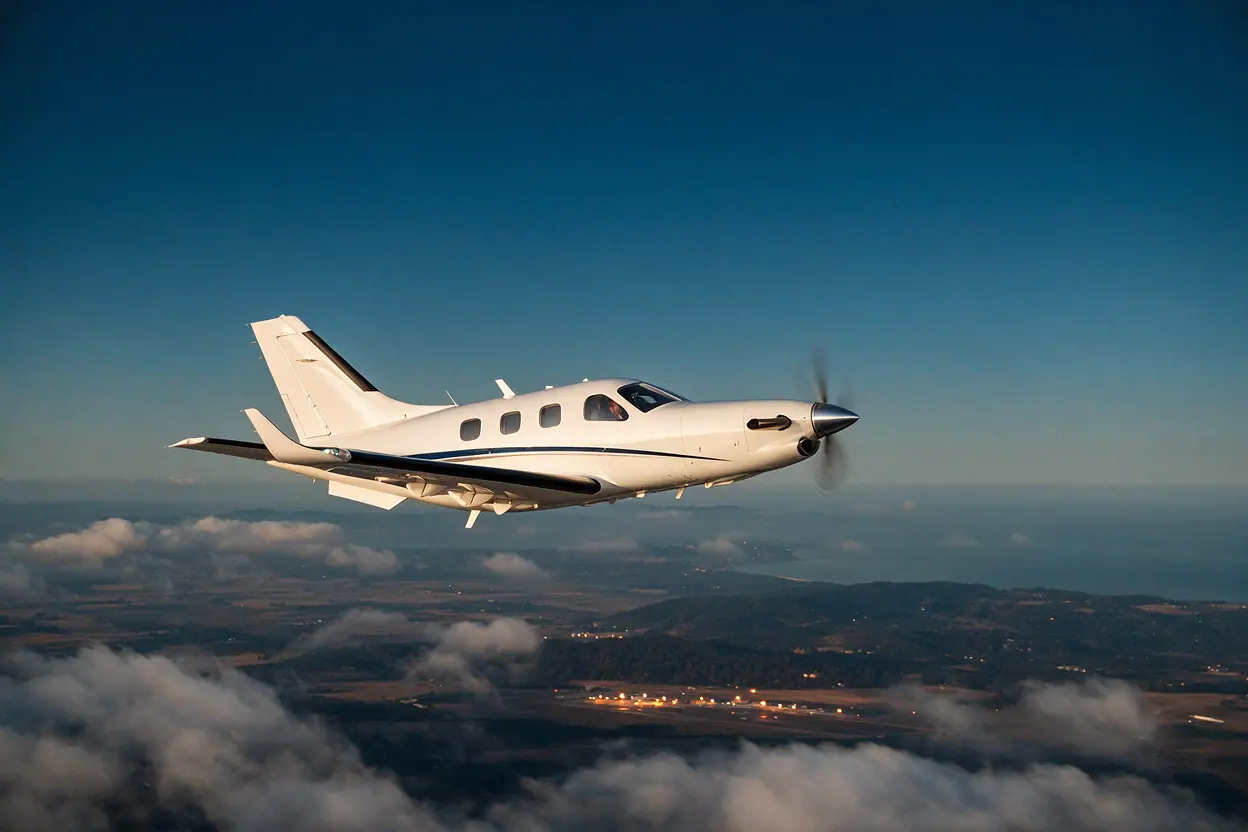
Aircraft pricing for Dallas to Houston private jet
A private jet from Dallas to Houston flies 208 nautical miles in 1h 02m on a turboprop, quoted at $2,500–$3,500 one way.Five classes work on this route, all nonstop, and the spread between them is wide relative to the distance. Times below are block times; the price bands are estimates for the whole aircraft, not per seat, and they move with date, direction and how long the aircraft sits in Houston.
| Jet category | En route time | Single-leg est. | Detail |
|---|---|---|---|
| Turboprop | 1h 02m | $2,500–$3,500 | Preferred match |
| Light jet | 0h 48m | $4,000–$6,000 | Nonstop |
| Midsize jet | 0h 48m | $5,200–$8,000 | Nonstop |
| Super-midsize jet | 0h 46m | $7,200–$10,000 | Nonstop |
| Heavy jet | 0h 46m | $9,500–$14,500 | Nonstop |
Priced per aircraft, not per passenger, excluding federal excise tax and segment fees. Block time covers taxi, climb, and descent.
Airline ticket costs vs charter, Dallas–Houston
Airline prices are the lowest fares Google Flights displayed for one passenger on Dec 9, 2026 (checked Nov 15, 2026); the charter row is our estimate for the entire aircraft. For 8 passengers, first class airline seat tickets total about $1,576, compared with $2,500–$3,500 for the whole turboprop.
| Way to fly | Operator | Dur. | Single-leg est. | Per seat |
|---|---|---|---|---|
| Coach on the airlines | United · nonstop | 1h 15m | $99 | $99 |
| First class airline seat | American · nonstop | 1h 16m | $197 | $197 |
| Turboprop | Full plane, seating as many as 8 | 1h 02m | $2,500–$3,500 | $310–$440 |
Airline ticket prices shift daily and cover no bags past the fare allowance; the per-seat charter number assumes every seat is occupied.
How a turboprop suits this mission
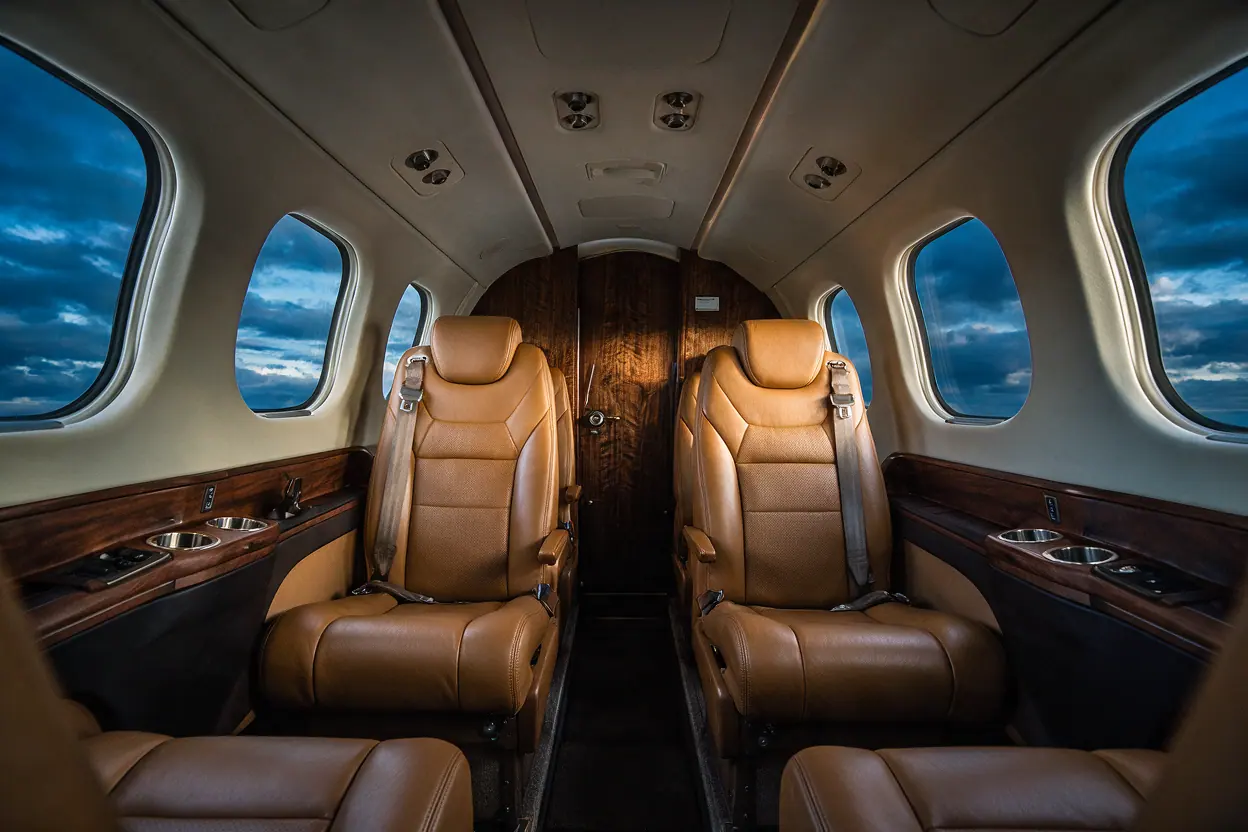
The turboprop is the right default at this distance. There is no altitude or speed advantage worth the extra cost on a leg this short, and a turboprop covering 208 nautical miles nonstop keeps the whole team on one aircraft for less than the light jet band. The King Air 350i carries eight with 55 cu ft of baggage; the TBM 960 carries six and climbs high and fast, which matters if weather builds over the Brazos.
Alternatives make sense on specific conditions. If the trip is a two-leg day with a client meeting in between, the light jet and midsize jet both run Dallas to Houston in 0h 48m and give you a cabin you can work in at cruise. Super-midsize and heavy jets finish in 0h 46m and price from $7,200 and $9,500, so book them only when the same aircraft continues to a longer leg afterward. For a Houston meeting that ends after dark, a midsize jet out of Dallas Love Field keeps the return flexible without committing to heavy jet pricing on a 239-mile trip.
Daher TBM 960
- 6 pax
- 330 kt speed
- 1,730 nm legs
Cabin size 4 ft tall, 13 ft 3 in long. Bags 32 cu ft.
Beechcraft King Air 350i
- 8 pax
- 312 kt speed
- 1,800 nm legs
Cabin size 4 ft 9 in tall, 16 ft 8 in long. Bags 55 cu ft.
When demand and prices peak
Demand on Dallas to Houston follows the business calendar more than the tourist one. Monday mornings and Thursday afternoons are the tightest windows, and pricing reflects it; booking a corporate jet Dallas to Houston on a Monday morning costs more than the same aircraft on a Tuesday midday, and availability of the cheapest turboprops disappears first. OTC Energy Conference week in Houston and major sporting weekends tighten the Houston side further.
For the best selection, request quotes once your meeting date is firm and ask for both a one-way and a same-day return on the same aircraft. If the schedule is still moving, then holding a second option on a different Dallas airport gives you a fallback without re-quoting from scratch. A same-day return Dallas to Houston in a light jet keeps the aircraft on the ground during your meeting, and the operator prices that wait time into the quote, so tell your broker the meeting length up front. Summer heat is a factor at both ends; high afternoon temperatures reduce performance on smaller aircraft, and that occasionally shifts the departure to an earlier slot.

Leaving Dallas
Dallas Love Field has an 8,800 ft runway and sits minutes from downtown and the Park Cities, which is why most corporate departures on this route start there. Addison Airport, with its 7,203 ft runway, serves the north Dallas corridor and the Telecom Corridor traffic headed south, and it is often the faster ground option if your office is in Plano or Richardson. Peak departure windows are early morning and the 4 to 6 pm block; if your schedule allows, a mid-morning slot cuts both ramp congestion and the chance of a flow delay.
Arriving in Houston
William P. Hobby sits seven miles south of downtown and puts you on the Gulf Freeway or I-45 quickly, which suits meetings in the Texas Medical Center, downtown or the Energy Corridor. Sugar Land Regional, with an 8,000 ft runway, is the better arrival for the west and southwest side, including the Energy Corridor and the suburbs beyond Beltway 8. Choosing the wrong one adds a 25 to 40 mile drive, so match the airport to the first meeting, not to the return.
Houston traffic is the real variable on the ground, not the flight. If your first stop is downtown or the Medical Center, then Hobby saves you the cross-town run from Sugar Land, which matters most for a morning start. A turboprop or light jet landing at Sugar Land Regional puts the west side within a short drive, and both airports handle the aircraft types on this route without runway constraints. For an international connection the same day, Hobby is the simpler handoff.
| Field | ID | Rwy |
|---|---|---|
| William P. Hobby Airport | KHOU / HOU | 7,602 ft |
| Sugar Land Regional Airport | KSGR / SGR | 8,000 ft |
| Dallas Love Field | KDAL / DAL | 8,800 ft |
| Addison Airport | KADS / ADS | 7,203 ft |
Comparable private jet routes for Dallas – Houston
These 6 private jet routes cover 158 to 279 nautical miles, with one-way turboprop estimates ranging $2,200 to $4,500.
This route’s FAQs
How long is a corporate jet Dallas to Houston flight?
Block time is 0h 48m in a light or midsize jet and 0h 46m in a super-midsize or heavy jet. A turboprop takes 1h 02m for the 208 nautical miles. Add taxi time at each end and the drive to the FBO; door to door, the trip is usually faster than commercial.
What does a corporate jet Dallas to Houston cost?
Estimates run $2,500 to $3,500 for a turboprop, $4,000 to $6,000 for a light jet, $5,200 to $8,000 for a midsize, and $7,200 to $10,000 for super-midsize; heavy jets start at $9,500. These are whole-aircraft estimates, not per seat. Divide by the number of passengers traveling and the turboprop usually wins on this distance.
Which airports serve this route?
Dallas Love Field (8,800 ft runway) and Addison Airport (7,203 ft) on the Dallas side; William P. Hobby (7,602 ft) and Sugar Land Regional (8,000 ft) in Houston. Hobby is closest to downtown and the Medical Center, while Sugar Land serves the Energy Corridor and the west side.
Can I do a same-day round trip Dallas to Houston by private jet?
Yes, and it is the most common pattern for business travel on this route. A light jet or turboprop can arrive in the morning, wait through a meeting and return the same afternoon. Tell your broker the expected meeting length when requesting the quote so the wait time is priced correctly.
How much notice do I need for a corporate jet Dallas to Houston?
On a route this busy, a turboprop or light jet can often be sourced with a day or two of notice, but the cheapest options go first on Monday and Thursday peaks. For a specific departure during a Houston conference week, request quotes as soon as the date is fixed and ask for two aircraft options.
Does a turboprop make sense for a business trip to Houston?
On 208 nautical miles, yes. The time penalty against a light jet is small and the price difference is real, and the King Air 350i seats eight with 55 cu ft of baggage.