Corporate Jet Los Angeles to San Francisco
A corporate jet Los Angeles to San Francisco covers 321 miles in about an hour. A turboprop makes the run in 1 hour 17 minutes, a light jet in 59 minutes. Door-to-door time favors the airplane on this corridor.
- 279 nm321 sm
- 1h 17mturboprop duration
- $3,000–$4,500one-way quote
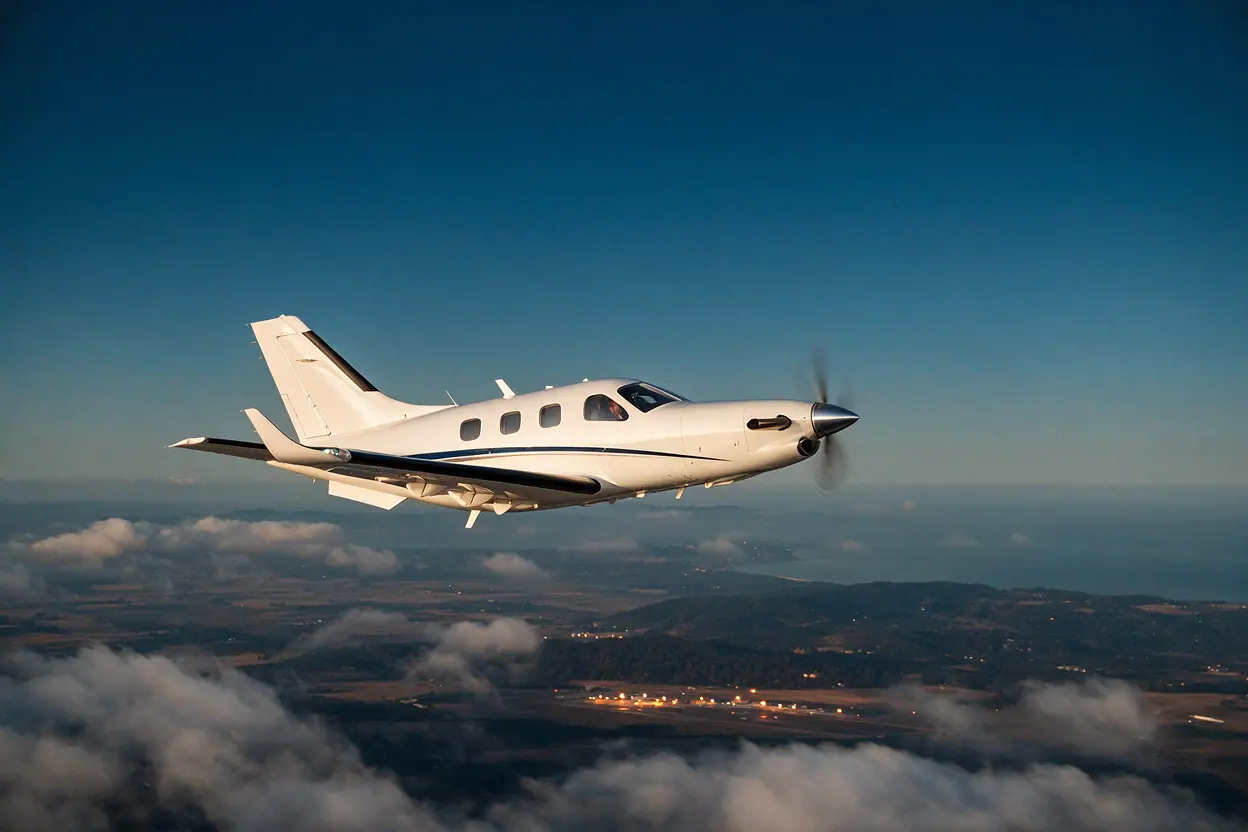
Aircraft pricing for Los Angeles to San Francisco private jet
A private jet from Los Angeles to San Francisco flies 279 nautical miles in 1h 17m on a turboprop, quoted at $3,000–$4,500 one way.Five classes clear this route nonstop, and the spread between them is wider than the time difference. Below are typical block times and one-way estimate ranges for the 279 nautical miles from Los Angeles to San Francisco. Quote ranges move with aircraft availability, crew duty and the hour you fly, so treat these as a starting point for a comparison, not a fare.
| Jet category | En route time | Single-leg est. | Detail |
|---|---|---|---|
| Turboprop | 1h 17m | $3,000–$4,500 | Preferred match |
| Light jet | 0h 59m | $4,000–$6,000 | Nonstop |
| Midsize jet | 0h 58m | $5,200–$8,000 | Nonstop |
| Super-midsize jet | 0h 55m | $7,200–$10,000 | Nonstop |
| Heavy jet | 0h 55m | $9,500–$14,500 | Nonstop |
Priced per aircraft, not per passenger, excluding federal excise tax and segment fees. Block time covers taxi, climb, and descent.
Airline ticket costs vs charter, Los Angeles–San Francisco
Airline prices are the lowest fares Google Flights displayed for one passenger on Dec 9, 2026 (checked Nov 15, 2026); the charter row is our estimate for the entire aircraft. For 8 passengers, first class airline seat tickets total about $1,232, compared with $3,000–$4,500 for the whole turboprop.
| Way to fly | Operator | Dur. | Single-leg est. | Per seat |
|---|---|---|---|---|
| Coach on the airlines | Frontier · nonstop | 1h 28m | $19 | $19 |
| First class airline seat | American · nonstop | 1h 35m | $154 | $154 |
| Turboprop | Full plane, seating as many as 8 | 1h 17m | $3,000–$4,500 | $380–$560 |
Airline ticket prices shift daily and cover no bags past the fare allowance; the per-seat charter number assumes every seat is occupied.
How a turboprop suits this mission
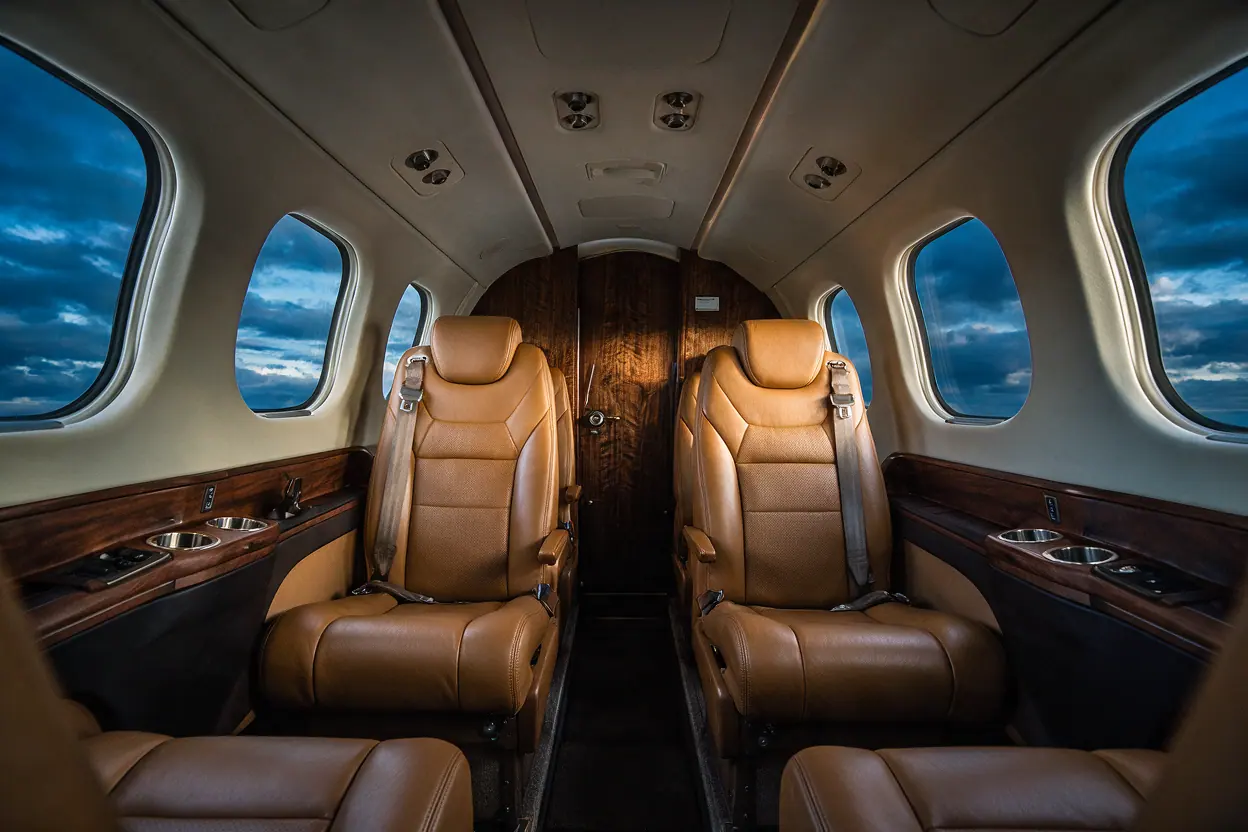
The turboprop is the right fit at this distance, and it is the only class where the numbers come out clearly ahead. A King Air 350i or TBM 960 covers the 279 nautical miles in 1 hour 17 minutes, and the cabin is still tall enough to open a laptop with the tray table down. A turboprop on the Los Angeles to San Francisco run keeps the trip under about 1 hour 20 minutes with eight passengers and 55 cubic feet of baggage in the 350i.
Midsize and super-midsize jets cut the block time to 58 and 55 minutes and buy a quieter cabin, which matters more for a team of six carrying luggage than for two people with laptops. They are also the better answer when the return leg stacks onto the same day and you want one crew, one tail and a fixed plan. A light jet covers Los Angeles to San Francisco in 59 minutes for 4,000 to 6,000 dollars when budget over cabin height is the deciding factor. Heavy jets on this length are mostly about positioning or a large party, not the mission.
Daher TBM 960
- 6 pax
- 330 kt speed
- 1,730 nm legs
Cabin size 4 ft tall, 13 ft 3 in long. Bags 32 cu ft.
Beechcraft King Air 350i
- 8 pax
- 312 kt speed
- 1,800 nm legs
Cabin size 4 ft 9 in tall, 16 ft 8 in long. Bags 55 cu ft.
Peak demand and booking lead time
Monday mornings northbound and Thursday afternoons southbound are the busiest hours on this corridor, and that is when turboprop and light jet availability gets thin with a week or less of notice. Booking Los Angeles to San Francisco corporate travel 10 to 14 days out preserves the lower end of the estimate range, especially for a same-day return that needs the aircraft to wait or come back for you. Tech earnings weeks, the Dreamforce run in the fall and major conventions at Moscone all pull tails south and tighten the fleet.
One-way pricing on a 279 nautical mile leg is rarely the whole story. If the aircraft has to reposition to Los Angeles to collect you, then that empty leg can land on your quote, and a round trip with the crew on the ground in San Francisco is often the cleaner number. Peak-hour departures out of Van Nuys also stack up behind other traffic during the morning push, so an early slot buys schedule reliability as much as a lower rate. Prices quoted here are estimates and firm up once a specific aircraft is held.
Leaving Los Angeles
Van Nuys is the usual departure point for a corporate trip north, with 8,001 feet of runway and a short drive from the West Valley and the 101. Burbank works for downtown and the studios, and Los Angeles International has the longest runway of the three at 12,894 feet, which matters only on a hot day with a full load. Flying from Van Nuys rather than Los Angeles International saves the terminal walk and the curb wait, which is where the door-to-door gap starts to build against a commercial schedule.
If your party starts on the Westside, then a departure from Van Nuys costs you 20 to 30 minutes on the 405 before you are even at the ramp, so weigh that against the closer drive to Los Angeles International. Summer heat on the Valley floor is the one seasonal factor that can trim payload on a turboprop departure, and afternoon departures feel it more than morning ones.
Arriving in San Francisco
San Francisco International sits 12 miles south of downtown and takes about 20 to 25 minutes by car outside rush hour, longer on the 101 when the Giants or a convention is in town. Oakland San Francisco Bay Airport across the bridge is the alternate, with 10,520 feet of runway and a short hop into the Financial District or a South of Market meeting. A turboprop into San Francisco International or Oakland puts you at a meeting by mid-morning, well ahead of a commercial arrival that starts with a baggage claim queue.
If your first appointment is in Silicon Valley rather than the city, then San Francisco International is still the practical arrival, and the drive south on the 101 or the 280 is the same road you would take from a commercial gate with less of the wait. No customs clearance applies on this leg because it stays inside California, so you walk from the aircraft to the car.
| Field | ID | Rwy |
|---|---|---|
| San Francisco International Airport | KSFO / SFO | 11,870 ft |
| Oakland San Francisco Bay Airport | KOAK / OAK | 10,520 ft |
| Van Nuys Airport | KVNY / VNY | 8,001 ft |
| Hollywood Burbank/Bob Hope Airport | KBUR / BUR | 6,886 ft |
| Los Angeles International Airport | KLAX / LAX | 12,894 ft |
Comparable private jet routes for Los Angeles – San Francisco
These 6 private jet routes cover 183 to 359 nautical miles, with one-way turboprop estimates ranging $2,200 to $5,500.
This route’s FAQs
How long is a corporate jet Los Angeles to San Francisco flight?
Block time runs 55 minutes in a super-midsize or heavy jet and 1 hour 17 minutes in a turboprop, gate to gate, over 279 nautical miles. Add roughly 15 minutes at each end for boarding and the drive, and the city-center to city-center trip lands near 2 hours. That compares with 5 to 7 hours behind the wheel on Interstate 5.
What does a corporate jet Los Angeles to San Francisco cost?
Estimate ranges start at 3,000 to 4,500 dollars one way for a turboprop and run to 9,500 to 14,500 dollars for a heavy jet. A light jet sits at 4,000 to 6,000 dollars and a midsize at 5,200 to 8,000 dollars. These are estimates for the 279 nautical mile leg and move with aircraft, crew time and the day you fly.
Can I do a same-day return between Los Angeles and San Francisco by private aircraft?
Yes. At 55 to 77 minutes each way, a morning departure from Van Nuys, a full day of meetings and an evening return to Los Angeles fits inside one crew duty period. Ask for a round-trip quote with the aircraft held in San Francisco rather than released, because waiting time is usually cheaper than a repositioning leg back to collect you later.
Which San Francisco airport do private flights use?
San Francisco International is the primary arrival, with 11,870 feet of runway and a 20 to 25 minute drive to downtown. Oakland San Francisco Bay Airport is the alternate, 10,520 feet of runway, useful when the city is congested or your meetings sit in the East Bay. Both keep the leg domestic, so no customs stop applies.
Is a turboprop or a jet better for Los Angeles to San Francisco?
The turboprop wins on cost at this distance, running 3,000 to 4,500 dollars against 9,500 to 14,500 dollars for a heavy jet, with only about 20 minutes more block time. A King Air 350i carries eight passengers and 55 cubic feet of baggage. Choose a jet when cabin height, quiet or a tight same-day schedule matters more than the rate.
How far ahead should I book a corporate flight from Los Angeles to San Francisco?
Ten to 14 days of notice usually keeps you inside the lower part of the estimate range and gives you a real choice of turboprops and light jets. Inside 72 hours, Monday morning and Thursday afternoon departures are the hardest to fill, and the aircraft left tend to be midsize or larger. Peak convention weeks in San Francisco need more lead time than a normal business week.