Corporate jet New York to Boston
A corporate jet New York to Boston covers 182 miles in as little as 39 minutes. The turboprop makes the trip in 51 minutes at an estimated $2,200 to $3,500. This page breaks down aircraft, airports, and timing for business travelers.
- 158 nm182 sm
- 0h 51mturboprop duration
- $2,200–$3,500one-way quote
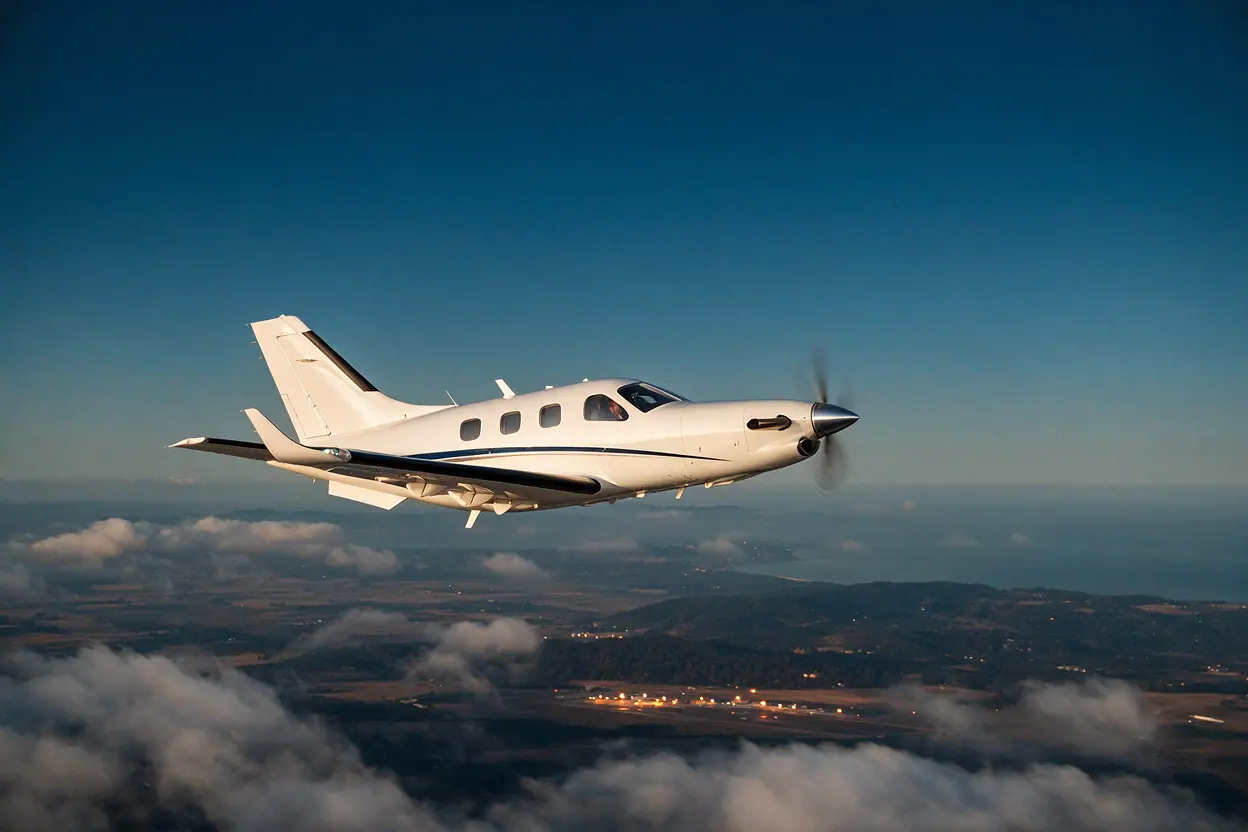
Aircraft pricing for New York to Boston private jet
A private jet from New York to Boston flies 158 nautical miles in 0h 51m on a turboprop, quoted at $2,200–$3,500 one way.The table below compares turboprop, light, midsize, super-midsize, and heavy jets on this route, including nonstop time and estimated price ranges. Times are airborne only; add taxi, boarding, and ground transport for door-to-door planning. Use the turboprop and light jet columns as the practical baseline for most business trips between these cities.
| Jet category | En route time | Single-leg est. | Detail |
|---|---|---|---|
| Turboprop | 0h 51m | $2,200–$3,500 | Preferred match |
| Light jet | 0h 41m | $4,000–$6,000 | Nonstop |
| Midsize jet | 0h 41m | $5,200–$8,000 | Nonstop |
| Super-midsize jet | 0h 39m | $7,200–$10,000 | Nonstop |
| Heavy jet | 0h 39m | $9,500–$14,500 | Nonstop |
Priced per aircraft, not per passenger, excluding federal excise tax and segment fees. Block time covers taxi, climb, and descent.
Airline ticket costs vs charter, New York–Boston
Airline prices are the lowest fares Google Flights displayed for one passenger on Dec 9, 2026 (checked Nov 15, 2026); the charter row is our estimate for the entire aircraft. For 8 passengers, first class airline seat tickets total about $1,792, compared with $2,200–$3,500 for the whole turboprop.
| Way to fly | Operator | Dur. | Single-leg est. | Per seat |
|---|---|---|---|---|
| Coach on the airlines | JetBlue · nonstop | 1h 18m | $154 | $154 |
| First class airline seat | Delta · nonstop | 1h 31m | $224 | $224 |
| Turboprop | Full plane, seating as many as 8 | 0h 51m | $2,200–$3,500 | $280–$440 |
Airline ticket prices shift daily and cover no bags past the fare allowance; the per-seat charter number assumes every seat is occupied.
How a turboprop suits this mission
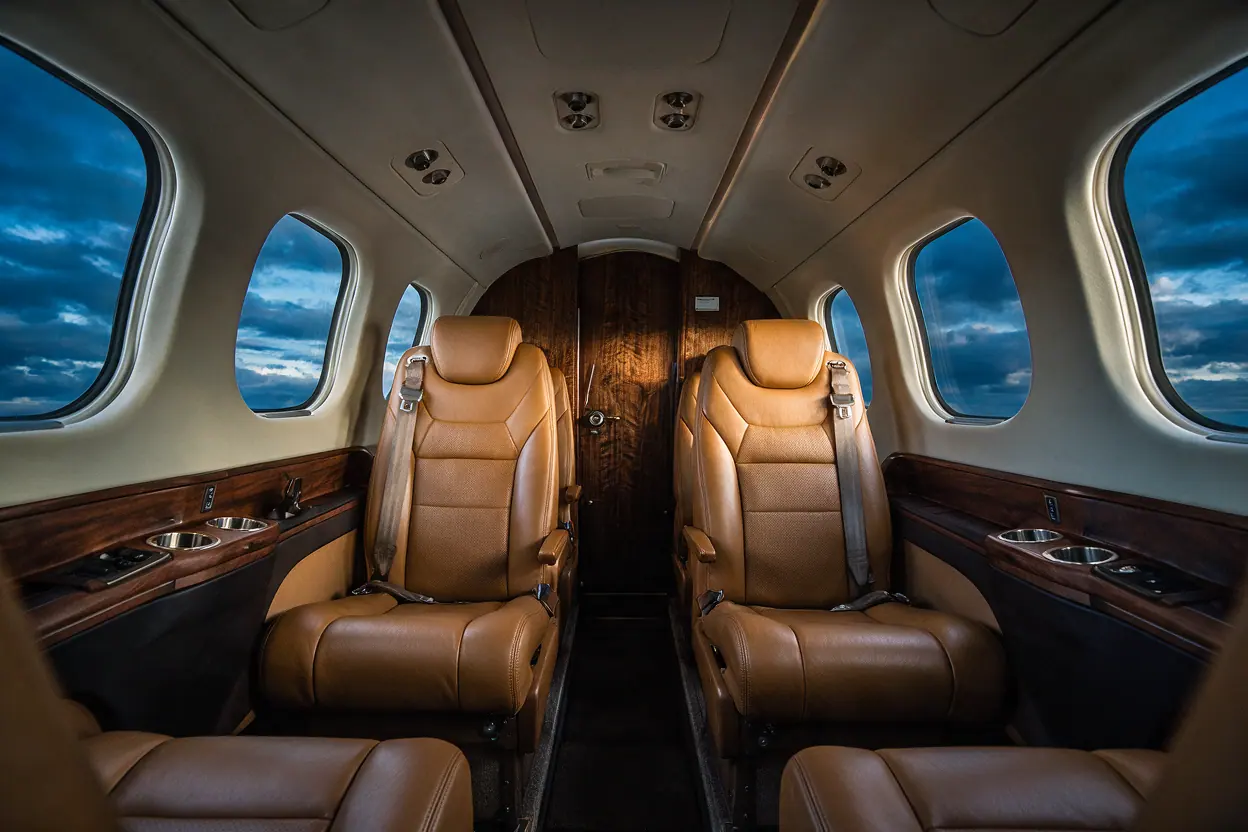
At 182 miles, the turboprop is the practical choice for most corporate teams flying New York to Boston. It cruises the route in 51 minutes for an estimated $2,200 to $3,500, carrying up to eight passengers in a King Air 350i or six in a TBM 960. That covers a typical deal team without stretching to a larger airframe. The light and midsize jets shave roughly ten minutes off the flight but cost more, so they only make sense when you need a specific cabin, more baggage volume, or a departure slot the turboprop cannot make.
If your group is smaller or your schedule is tight, then the light jet at 41 minutes and $4,000 to $6,000 is the next step up and still efficient on this distance. Midsize and super-midsize jets offer more stand-up room and baggage space, but the time savings are marginal on a route this short. Heavy jets are available but rarely justified unless the leg is part of a longer itinerary or the passenger count demands it. For a same-day Boston meeting, the turboprop keeps the cost low and the schedule simple.
Daher TBM 960
- 6 pax
- 330 kt speed
- 1,730 nm legs
Cabin size 4 ft tall, 13 ft 3 in long. Bags 32 cu ft.
Beechcraft King Air 350i
- 8 pax
- 312 kt speed
- 1,800 nm legs
Cabin size 4 ft 9 in tall, 16 ft 8 in long. Bags 55 cu ft.
Peak demand on corporate jet New York
Weekday mornings and late afternoons are the busiest windows for corporate travel between these cities. That is when turboprop and light jet availability tightens. If your meeting starts at 9 a.m., then the 7 a.m. departure bank is the one to lock in first. Prices tend to firm up as those slots fill, so booking a few days out is safer than hoping a turboprop is still open the night before. For a same-day round trip, the practical pattern is an early outbound and a mid-afternoon return.
Summertime and the weeks around major Boston events can add pressure on the Hanscom side. Winter weather occasionally forces de-icing delays at either end. If your trip is date-sensitive, then build a buffer into the return leg. For same-day round trips, the aircraft typically waits in Boston for only a few hours; booking both legs together keeps the estimate predictable. A mid-afternoon return from Hanscom avoids the worst of the Route 128 rush.

Departing from the New York side
Teterboro Airport (KTEB) and Westchester County Airport (HPN) are the two business-aviation airports that serve this route. Teterboro has a 6,997-foot runway; Westchester's longest is 6,549 feet, ample for turboprops and light jets on a short hop. Ground time at either is typically a fraction of what you would face at a commercial terminal. If your team is based in Connecticut or Westchester, then HPN usually wins on drive time; from Manhattan, Teterboro is the conventional choice. From Midtown, Teterboro is the usual departure point for a corporate jet New York to Boston. Plan to arrive with enough margin to load bags and settle in; the flight itself is shorter than many people's commute to the airport.
Arriving in Boston
At the Boston end, Hanscom Field (KBED) in Bedford is the business-aviation airport of choice for most corporate travelers. It has a 7,011-foot runway and quick access to Route 128 and the western suburbs. Boston Logan (KBOS) is the commercial alternative, with a 10,083-foot runway, but you will deal with terminal traffic and TSA screening if you fly commercial. Hanscom puts you closer to tech and defense offices along the Route 128 corridor, while Logan is better for downtown or Seaport meetings. Neither is far by car outside rush hour, but the difference matters on a same-day trip with a tight schedule. If your first meeting is in Cambridge, then Hanscom saves you the tunnel traffic from Logan.
| Field | ID | Rwy |
|---|---|---|
| Laurence G Hanscom Field | KBED / BED | 7,011 ft |
| Boston Logan International Airport | KBOS / BOS | 10,083 ft |
| Teterboro Airport | KTEB / TEB | 6,997 ft |
| Westchester County Airport | KHPN / HPN | 6,549 ft |
Comparable private jet routes for New York – Boston
These 6 private jet routes cover 96 to 208 nautical miles, with one-way turboprop estimates ranging $2,200 to $3,500.
This route’s FAQs
How long is a corporate jet New York to Boston flight?
In the air, a turboprop takes about 51 minutes and a light or midsize jet about 41 minutes; super-midsize and heavy jets are roughly 39 minutes. Add taxi time at both ends, which on this route can rival the flight itself. Door-to-door, most teams plan two to two and a half hours from Manhattan to a Boston meeting.
What does a corporate jet New York to Boston cost?
Estimated pricing starts at $2,200 to $3,500 for a turboprop and runs $4,000 to $6,000 for a light jet. Midsize jets are $5,200 to $8,000, super-midsize $7,200 to $10,000, and heavy jets $9,500 to $14,500. These are estimates and depend on aircraft availability, crew time, and ground handling at each airport.
Which airport is best for a Boston-bound corporate jet?
Hanscom Field (KBED) in Bedford is the usual choice for business aviation, with a 7,011-foot runway and easy access to Route 128. Boston Logan (KBOS) works if your meetings are downtown, but you will contend with commercial terminal traffic and TSA screening. The right pick depends on where your first meeting is.
Can a team of eight fly together on this route?
Yes. The Beechcraft King Air 350i, a turboprop, carries up to eight passengers with 55 cubic feet of baggage. The Daher TBM 960 seats six with 32 cubic feet. If your group is larger, a midsize or super-midsize jet offers more seats and baggage volume, though the time savings over a turboprop are only a few minutes on this distance.
Is a same-day round trip realistic?
It is the common pattern on this route. An early morning departure from Teterboro or Westchester and a mid-afternoon return from Hanscom gives you a full business day in Boston without an overnight. The key is booking both legs together so the aircraft is scheduled to wait rather than reposition, which affects the estimate.
When should I book a corporate jet for this route?
For weekday morning departures, booking several days ahead is wise because that is when turboprop and light jet availability is tightest. Last-minute requests can often be filled, but choice of aircraft and departure time narrows. If your trip is tied to a Boston event or a holiday week, add more lead time.