Corporate jet Phoenix to Los Angeles
The corporate jet Phoenix to Los Angeles route covers 369 miles and flies nonstop. A turboprop makes the trip in about 1h 25m, with light jets closer to an hour. On a leg this short, the value comes from where you land.
- 321 nm369 sm
- 1h 25mturboprop duration
- $3,000–$5,000one-way quote
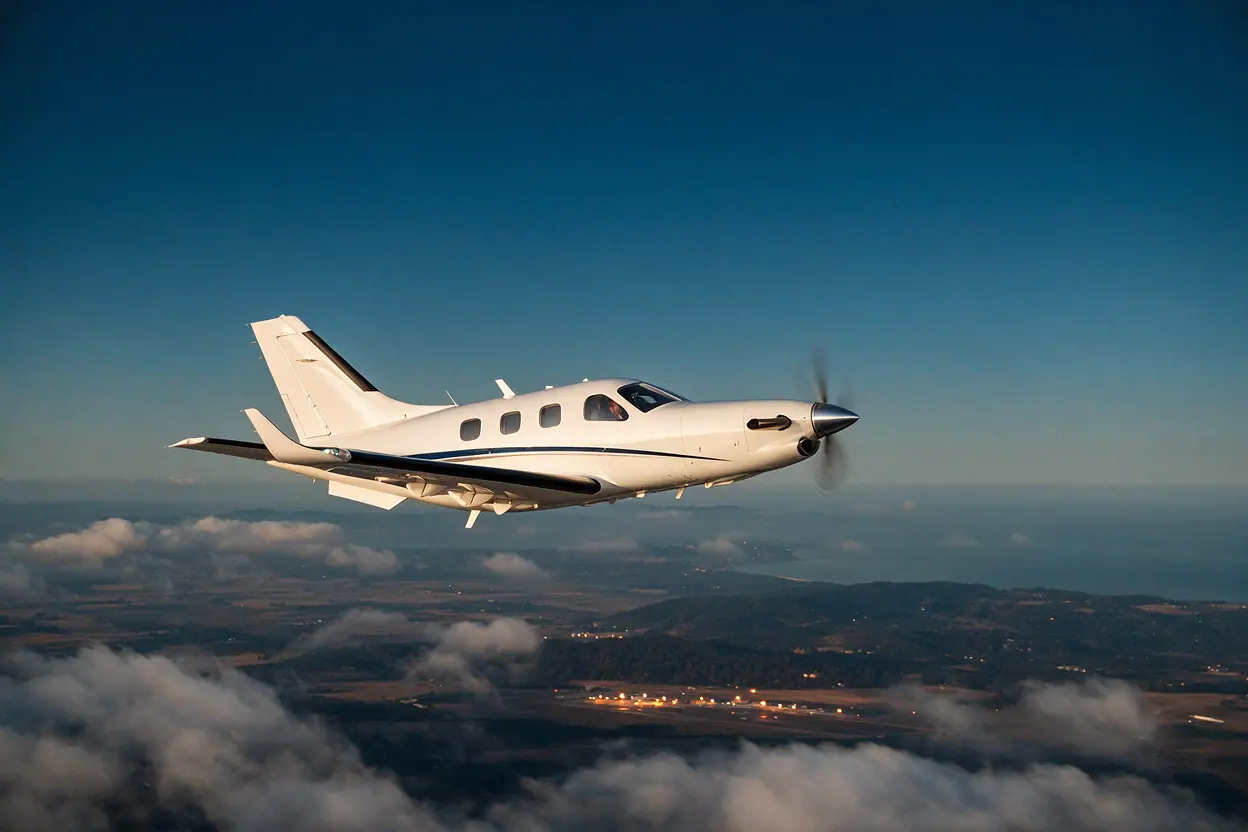
Aircraft pricing for Phoenix to Los Angeles private jet
A private jet from Phoenix to Los Angeles flies 321 nautical miles in 1h 25m on a turboprop, quoted at $3,000–$5,000 one way.The table below shows each class cleared for this 321-nautical-mile leg, with block time and an estimated one-way price range for the whole aircraft. Turboprops and light jets cover most of this market; midsize and larger cabins appear when the passenger count or luggage load pushes past what a small cabin holds. Treat prices as estimates until a quote is built for your date.
| Jet category | En route time | Single-leg est. | Detail |
|---|---|---|---|
| Turboprop | 1h 25m | $3,000–$5,000 | Preferred match |
| Light jet | 1h 05m | $4,000–$6,500 | Nonstop |
| Midsize jet | 1h 04m | $5,500–$8,500 | Nonstop |
| Super-midsize jet | 1h 01m | $7,500–$10,000 | Nonstop |
| Heavy jet | 1h 01m | $9,500–$14,500 | Nonstop |
Priced per aircraft, not per passenger, excluding federal excise tax and segment fees. Block time covers taxi, climb, and descent.
Airline ticket costs vs charter, Phoenix–Los Angeles
Airline prices are the lowest fares Google Flights displayed for one passenger on Dec 9, 2026 (checked Nov 15, 2026); the charter row is our estimate for the entire aircraft. For 8 passengers, first class airline seat tickets total about $1,312, compared with $3,000–$5,000 for the whole turboprop.
| Way to fly | Operator | Dur. | Single-leg est. | Per seat |
|---|---|---|---|---|
| Coach on the airlines | Frontier · nonstop | 1h 29m | $33 | $33 |
| First class airline seat | Delta · nonstop | 1h 40m | $164 | $164 |
| Turboprop | Full plane, seating as many as 8 | 1h 25m | $3,000–$5,000 | $380–$630 |
Airline ticket prices shift daily and cover no bags past the fare allowance; the per-seat charter number assumes every seat is occupied.
How a turboprop suits this mission
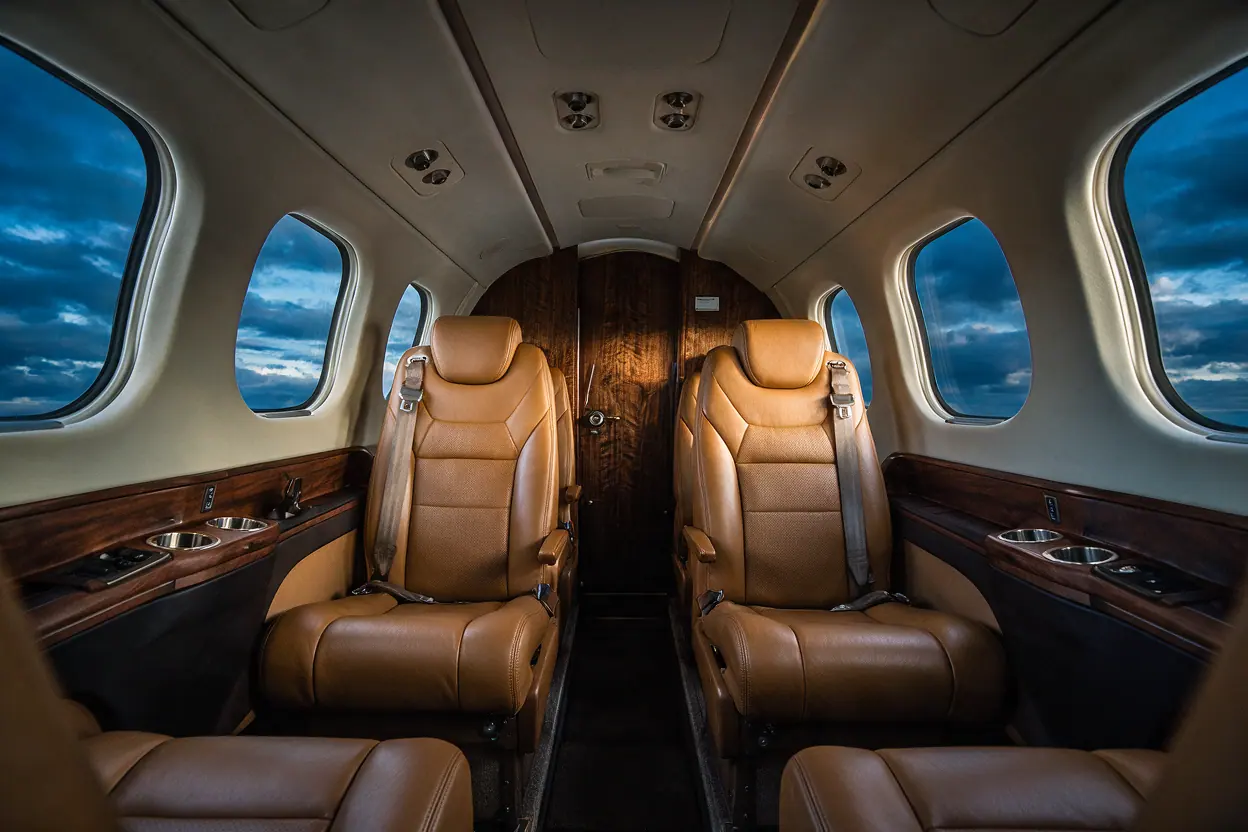
For a 321-nautical-mile leg, a turboprop is the practical choice for corporate jet Phoenix to Los Angeles travel because it balances speed and cost better than any jet. The Daher TBM 960 cruises at 330 knots with six seats, and the King Air 350i carries eight with a taller, longer cabin and 55 cubic feet of baggage. The time penalty against a light jet is roughly twenty minutes, and the turboprop estimate of $3,000 to $5,000 undercuts every jet class on the board. For a team of four or five heading to a morning meeting, the numbers favor it.
A light jet at $4,000 to $6,500 buys a little speed and a different cabin feel, which matters if the trip runs late and you want the faster block time. Midsize and super-midsize aircraft at $5,500 to $10,000 are harder to justify on distance alone, but they earn their keep with six to eight passengers and a full day of luggage. A heavy jet only makes sense when headcount or cargo outgrows the smaller cabins.
Daher TBM 960
- 6 pax
- 330 kt speed
- 1,730 nm legs
Cabin size 4 ft tall, 13 ft 3 in long. Bags 32 cu ft.
Beechcraft King Air 350i
- 8 pax
- 312 kt speed
- 1,800 nm legs
Cabin size 4 ft 9 in tall, 16 ft 8 in long. Bags 55 cu ft.
When prices peak on this route
Midweek morning departures toward Los Angeles carry the highest demand on this corporate jet Phoenix to Los Angeles route, because that is when business travel stacks up on both ends. Monday and Tuesday mornings fill turboprops and light jets first, and Friday afternoons run hot in the reverse direction as teams head home. Booking several days out gives you a real choice of aircraft instead of whatever is still open.
If you can shift the return leg to late morning or early afternoon, the price estimate usually drops and the aircraft availability widens. A same-day round trip is workable at this distance, but it needs both legs held at the time of booking rather than arranged after the first flight lands. Aircraft reposition to Phoenix for return legs, so an odd-hour departure can price better than the obvious one.
Leaving Phoenix
Phoenix Deer Valley Airport has an 8,196-foot runway and sits north of the city, which shortens the drive for teams based around Scottsdale and the Loop 101 corridor. Sky Harbor's 11,489-foot runway handles anything in the fleet, but the private side there shares airspace and ground flow with a busy commercial field. On a hot summer afternoon, density altitude trims turboprop and light jet performance, so an early departure is the safer plan.
Nonstop flights from Deer Valley reach the Los Angeles basin in roughly an hour of block time once you are off the ground, which keeps a same-day schedule realistic. If the team is scattered across the Valley, then pick the airport that minimizes total driving rather than the one closest to the office. Both Phoenix airports give you a short taxi and a quick climb to cruise.
Arriving in Los Angeles
Van Nuys Airport, with its 8,001-foot runway, puts you in the San Fernando Valley and works well for Westside and Burbank-side meetings. Hollywood Burbank's 6,886-foot runway lands you closer to studios and downtown-adjacent business districts. LAX is the long-runway option at 12,894 feet and the right call when the destination is the South Bay or a connecting commercial flight.
Van Nuys and Burbank airports typically cut the drive time into Los Angeles offices compared with a trek from LAX, especially in morning traffic. If your first meeting is in Century City or Santa Monica, then Van Nuys plus a car often beats landing at LAX and fighting the 405. The airport choice changes your door-to-door time more than the aircraft type does on a leg this short.
| Field | ID | Rwy |
|---|---|---|
| Van Nuys Airport | KVNY / VNY | 8,001 ft |
| Hollywood Burbank/Bob Hope Airport | KBUR / BUR | 6,886 ft |
| Los Angeles International Airport | KLAX / LAX | 12,894 ft |
| Phoenix Deer Valley Airport | KDVT / DVT | 8,196 ft |
| Phoenix Sky Harbor International Airport | KPHX / PHX | 11,489 ft |
Comparable private jet routes for Phoenix – Los Angeles
These 6 private jet routes cover 183 to 359 nautical miles, with one-way turboprop estimates ranging $2,200 to $5,500.
This route’s FAQs
How long is the corporate jet Phoenix to Los Angeles flight?
Nonstop block time runs from 1h 25m in a turboprop to about 1h 01m in a super-midsize or heavy jet. Light and midsize aircraft sit in between at roughly 1h 05m and 1h 04m. The 321-nautical-mile distance is short enough that taxi and climb take a meaningful share of the total time, so the aircraft class matters less than the airport pair.
What does a corporate jet Phoenix to Los Angeles cost?
Estimates for the whole aircraft run from $3,000 to $5,000 for a turboprop and $4,000 to $6,500 for a light jet. Midsize sits at $5,500 to $8,500, super-midsize at $7,500 to $10,000, and heavy jets at $9,500 to $14,500. These are one-way estimates for the full cabin and will move with date, airport pair, and how long the aircraft is held.
Which aircraft class suits this 369-mile leg?
A turboprop fits the distance best. The Daher TBM 960 carries six at 330 knots, and the King Air 350i carries eight with more cabin height and 55 cubic feet of baggage. Both beat the jets on price by a wide margin for a flight of about an hour, and only a larger party or heavy luggage load argues for a midsize cabin.
Which Los Angeles airport should the flight use?
Van Nuys has an 8,001-foot runway and serves the Valley and Westside, Burbank has 6,886 feet and sits near the studios, and LAX has 12,894 feet for South Bay destinations and connections. The right choice depends on where the first meeting is. On this route the ground leg often decides the schedule more than the air leg does.
Can a team fly Phoenix to Los Angeles and back in one day?
Yes, at this distance a same-day round trip is realistic. Hold both legs when you book so the aircraft stays assigned rather than being released after the outbound. Build in a buffer for the return because afternoon traffic around Los Angeles airports can add time on the ground, and a late return may price differently than a morning one.
How does flying private compare with driving or commercial on this route?
Driving Phoenix to Los Angeles covers 369 miles and takes most of a day, while commercial service adds airport time at both ends. A turboprop at 1h 25m plus short ground procedures keeps the trip inside a working day. When several colleagues travel together, the estimate for the whole aircraft is the figure to compare against individual tickets.